Loading...

Rejection could undermine UK's energy future
80%
Originality
95%
Accuracy
0%
Upvotes
Equinor has warned that rejecting approval for two major North Sea projects could make the UK appear uninvestable, casting doubt on the government's energy strategy. The Norwegian state oil company, which co-owns the Rosebank and Jackdaw fields, said it would reassess its future capital commitments in Britain if planning permission is denied.
The UK government is preparing to rule on the final approvals, a decision complicated by Labour's manifesto pledge to halt new drilling. Energy Secretary Miatta Fahnbulleh holds the ultimate authority following a public consultation that closed in August. The projects were initially cleared by the previous Conservative administration but faced delays after a Scottish court ruled that climate impacts were not fully weighed.
Rosebank sits in the North Atlantic roughly 80 miles north-west of the Shetland Islands and is estimated to hold up to 500 million barrels of oil and gas. The site's exploration licence dates back to 2001, with a discovery recorded in 2004 and a final investment decision reached in 2023. Adura, a joint venture between Equinor and Shell, operates both fields. Ithaca, an Aberdeen-based firm, holds a 20% stake in Rosebank. Construction on Jackdaw is 99% complete, meaning the project could begin supplying UK homes with gas by this winter if cleared.
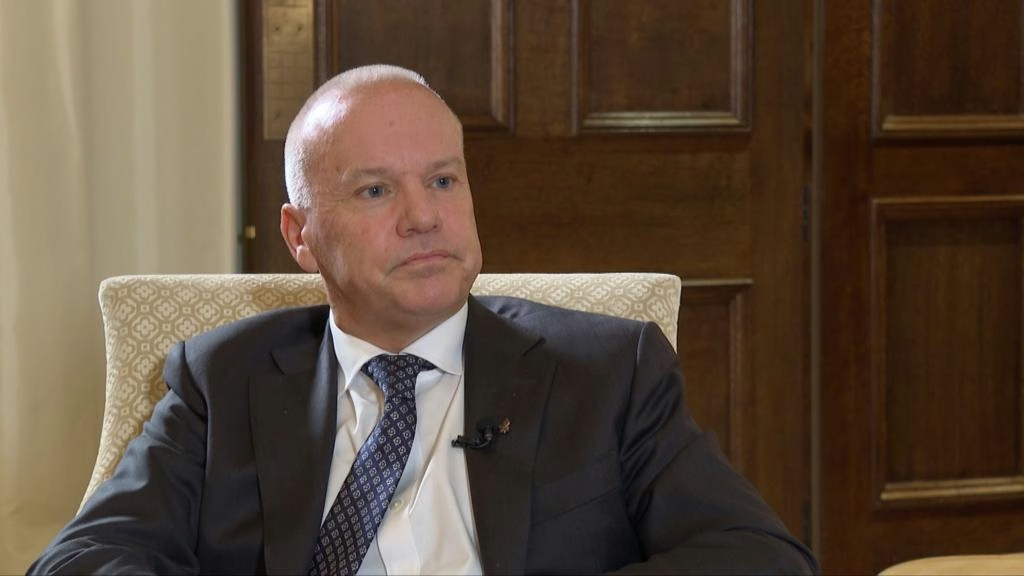
Rising power costs have intensified the debate over domestic energy independence. UK oil output is projected to drop by half by 2035, while the country already imports half of its gas from Norway. Anders Opedal, chief executive of Equinor, noted that Prime Minister Andy Burnham's call for a pragmatic approach suggests both sites will move forward. "The question will be: is the UK investable in the future? I hope it will not come to that," Opedal said. He added that geological conditions across the border are identical, making domestic production a viable option. "It's a political choice," he stated.
Critics argue the projects offer little domestic benefit. Tessa Khan, executive director of Uplift, a group pushing for a shift away from fossil fuels, said new drilling "won't cut our bills". She argued the output is primarily destined for export, which would enrich Equinor and the Norwegian government while leaving Britain with rising costs and a shrinking energy workforce. Khan warned the decision also tests Labour's climate credibility.
A government spokesperson described the North Sea as a vital national asset. The department emphasized that oil and gas will remain central to the energy system for decades as the country transitions to clean power. Any final ruling will consider environmental assessments and public feedback gathered during the consultation period.
