Loading...

Glasgow's satellite edge faces European competition

85%
Originality
100%
Accuracy
0%
Upvotes
Glasgow has quietly become Europe’s top producer of small satellites, but rising continental investment threatens to shift the balance of money and talent. The Scottish Government confirms more compact spacecraft are manufactured in the city than anywhere else on the continent, yet neighboring nations are pouring billions into their own aerospace programs.
The cluster began taking shape when Craig Clark returned to his hometown in 2005 to launch Clyde Space. Clark notes the local engineering ethos: "The Clyde made Glasgow and Glasgow made the Clyde." The new firm partnered with the University of Strathclyde to develop UKube-1, Scotland’s first satellite, proving that smaller, cheaper spacecraft could succeed commercially.
These satellites, known as CubeSats, use a modular design measuring 10cm by 10cm by 10cm. Manufacturers stack the units and equip them with cameras, sensors, or communication gear tailored to specific missions. The resulting data feeds into everyday systems, supporting weather forecasting, global navigation, shipping logistics, crop monitoring, and climate research.
The sector’s economic footprint has expanded rapidly. Across Scotland, the space industry generated £335m in income during 2022-23, marking a 69% rise over five years. The field employed 2,811 people that same period, an 81% increase driven largely by manufacturing and engineering roles.
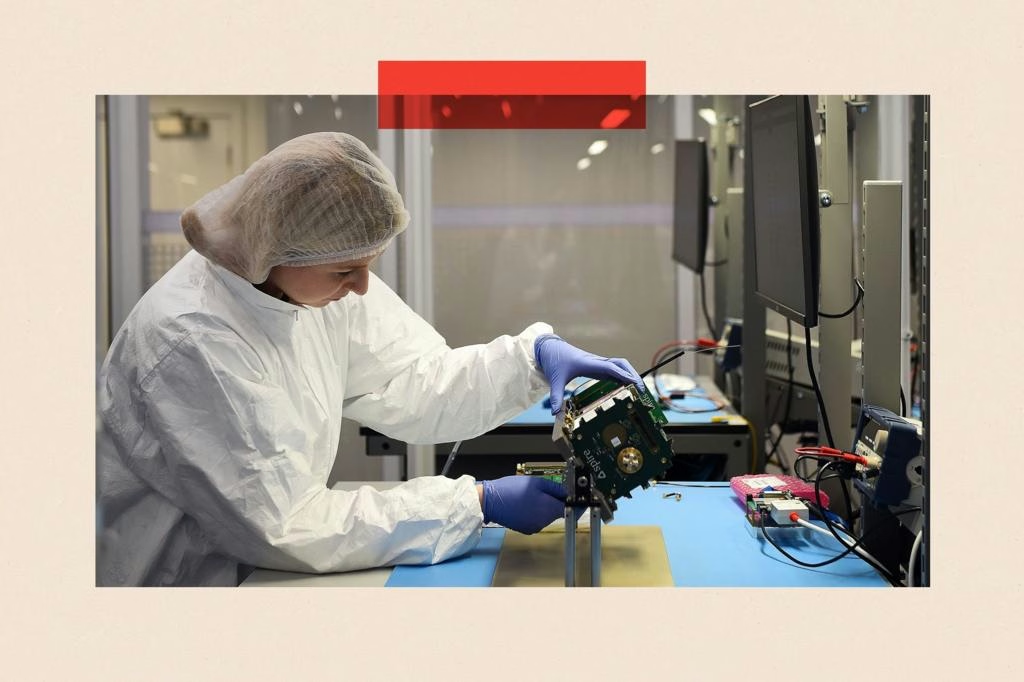
Glasgow’s reputation attracted additional firms to the region. Spire Global selected the city for its European headquarters in 2015, while local companies like Craft Prospect and Alba Orbital expanded their operations. Established engineering firms also joined the supply chain, creating a dense network of specialized contractors.
European governments are now accelerating their own funding to secure aerospace capabilities and data sovereignty. This financial push raises questions about how Glasgow will maintain its manufacturing edge. The outcome will likely depend on whether public and private sectors continue to align their resources with the city’s growing technical workforce.
