Loading...

Houthi attack undermines Trump's diplomatic pivot.
80%
Originality
95%
Accuracy
0%
Upvotes
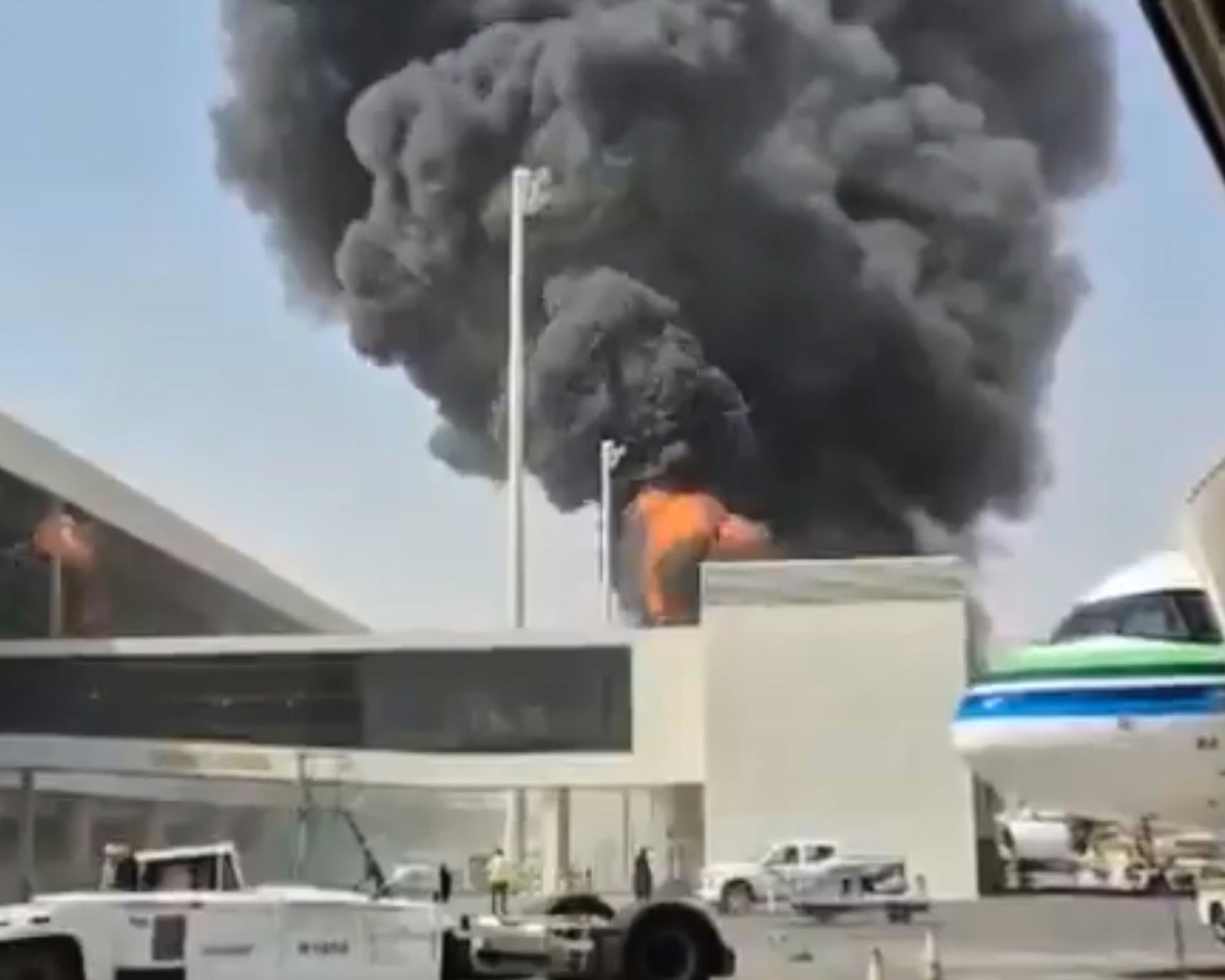
A Houthi rocket attack struck King Khalid International Airport in Riyadh on Saturday. The strike killed 12 people, and one of the dead is American. The attack has shattered President Donald Trump’s recent diplomatic plan to deprioritize the Iran and Yemen conflicts before the midterm elections.
Trump unveiled the strategy on Saturday. He blamed Ukrainian President Volodymyr Zelenskyy for spiraling diesel prices, arguing that Ukrainian strikes on Russian refineries drove the cost up. Trump also claimed the Iranian blockade of the Strait of Hormuz was broken and cited daily oil export numbers to calm markets. The plan relied on Saudi Arabia, Turkey, and Pakistan to manage Houthi threats in the Red Sea while the US stepped back.
European leaders have strongly rejected the administration’s framing. Former UK Prime Minister Boris Johnson wrote: “It is sickening that the USA is now lifting sanctions on Russian fuel, and transparently ridiculous to blame Ukraine for the spike in prices that obviously began with the closure of the strait of Hormuz. Putin is murdering innocent Ukrainian civilians every day. The Ukrainians are fighting for their lives. And yet the White House is apparently determined to force American drivers to bankroll Putin’s slaughter.” German Education Minister Karin Prien criticized the policy: “For a few litres of diesel. What moral bankruptcy.” The backlash comes just weeks after Congress passed a sanctions package against Moscow that allows Trump to penalize buyers of Russian energy.
The attack exposes serious gaps in regional air defenses. The Houthis fired rockets from 500 miles away, hitting the target repeatedly. The US has maintained a unilateral ceasefire with the group since 2025. Saudi officials requested American assistance twice after hostilities resumed in the summer, and Trump turned them down both times. Military analysts note that the initial three weeks of the war against Iran already cost $1n a day, making a renewed US strike a financially and strategically heavy lift.
The conflict has become a major economic issue for voters. Democratic candidates have consistently highlighted the war’s impact on fuel costs and daily expenses. Republican contenders are now shifting their focus to identity politics to avoid the backlash. With indirect talks ongoing in Doha, Trump faces a choice between resuming military action or pursuing a diplomatic settlement that addresses Iranian uranium enrichment.
The current approach is no longer viable. Trump must either rejoin the fight against the Houthis or negotiate directly with Tehran. The decision will likely determine whether the administration retains political control or faces a decisive rejection at the ballot box.
