Loading...

Arrested for spreading Russian influence in Europe.
85%
Originality
95%
Accuracy
0%
Upvotes
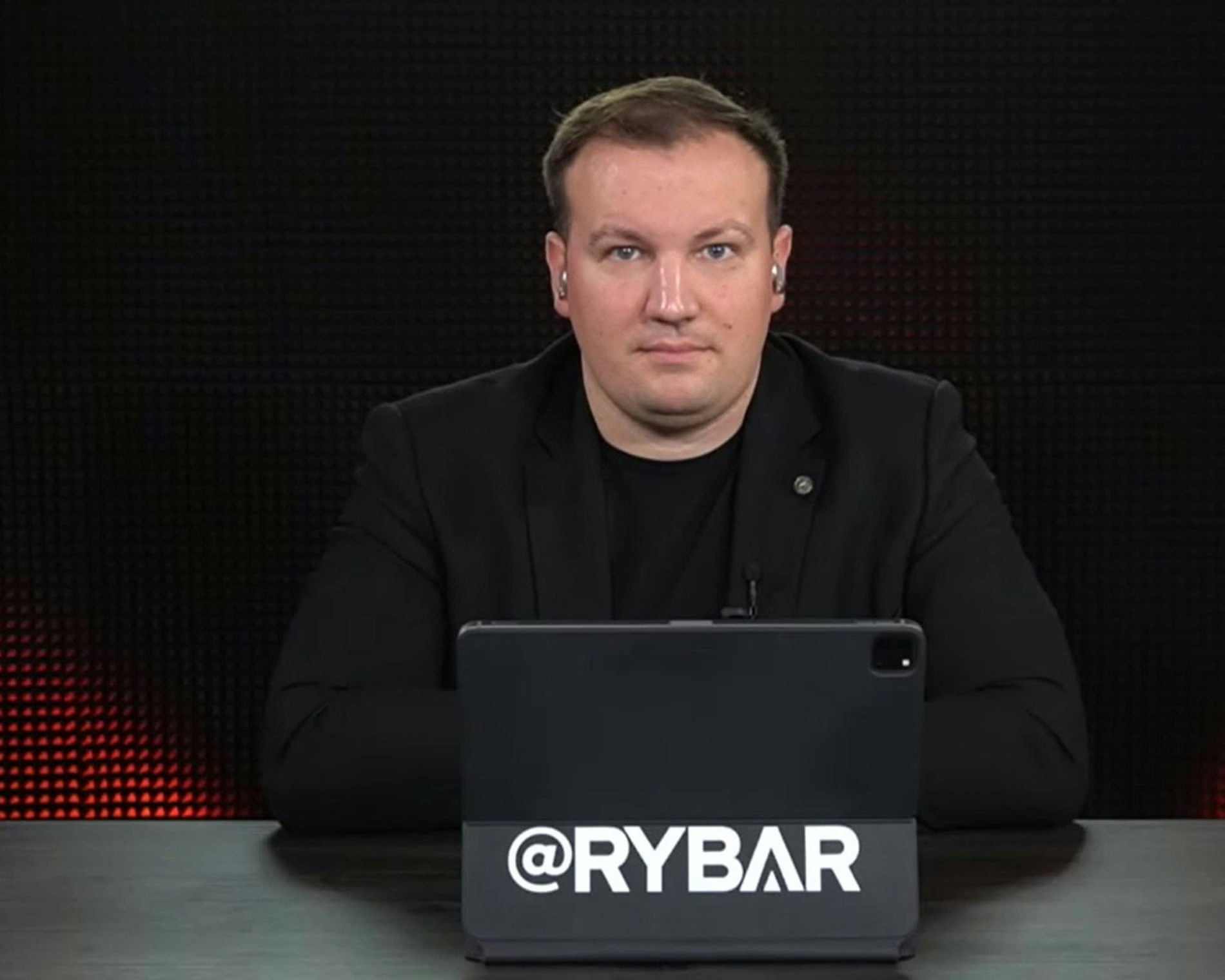
Montenegrin police arrested Russian blogger Mikhail Zvinchuk and four companions on Friday, alleging a coordinated plot to destabilize the country through hybrid warfare. Officers detained the group in the coastal town of Risan and moved them to the capital, Podgorica, for questioning. Security forces confiscated the suspects' phones and passports during the operation.
Zvinchuk launched the Telegram channel Rybar in 2018. The outlet now serves more than 1.5 million subscribers and regularly broadcasts Russian state narratives. Western governments have already targeted him for his influence. Washington accused him of interfering in the 2024 presidential election and offered a reward of up to $10m for information. British authorities sanctioned him and the channel in December 2025 for spreading propaganda and weakening support for Ukraine.
Russian officials have moved quickly to address the detention. Kremlin spokesperson Dmitry Peskov confirmed that Moscow is working to secure Zvinchuk's return. Former Russian president Dmitry Medvedev suggested the arrest could trigger a diplomatic prisoner swap. “We will probably have to replenish our pool of prisoners for exchange with European and American idiots in order to get our own people back,” he wrote on social media. The channel itself stated that “At the moment, the project team is in contact with Russia’s foreign ministry, which is working to resolve the situation. Since there were no violations of local legislation, we expect all detainees to be released,” according to a message posted online.
The arrest follows recent provocations from Zvinchuk, who posted online days earlier about bypassing a western entry ban. The detention also aligns with warnings from Prime Minister Milojko Spajić, who recently cautioned that Montenegro faces organized efforts to undermine its national security.
The incident deepens already strained ties between Montenegro and Russia. Relations have been tense since 2016, worsening after Montenegro joined Nato in 2017 and imposed sanctions after 2022. The government recently approved plans to end visa-free travel for Russian citizens starting 1 November, a move designed to align with European Union standards.
