Loading...

Record emissions signal urgent climate threats
85%
Originality
95%
Accuracy
0%
Upvotes
New Zealand’s atmosphere has reached record greenhouse gas levels, triggering a government assessment that warns of rapid glacier loss, intensifying heatwaves, and mounting economic damage. The Our Atmosphere and Climate 2026 report, released Wednesday, outlines how rising emissions are reshaping the country’s weather patterns and threatening native ecosystems.
Temperatures have climbed 1.36C since records began in 1909, with seven of the ten warmest years occurring in the last decade alone. Climate models project a very likely increase in days exceeding 25C by 2050, pushing communities toward greater heat-related illness and strain on local services.
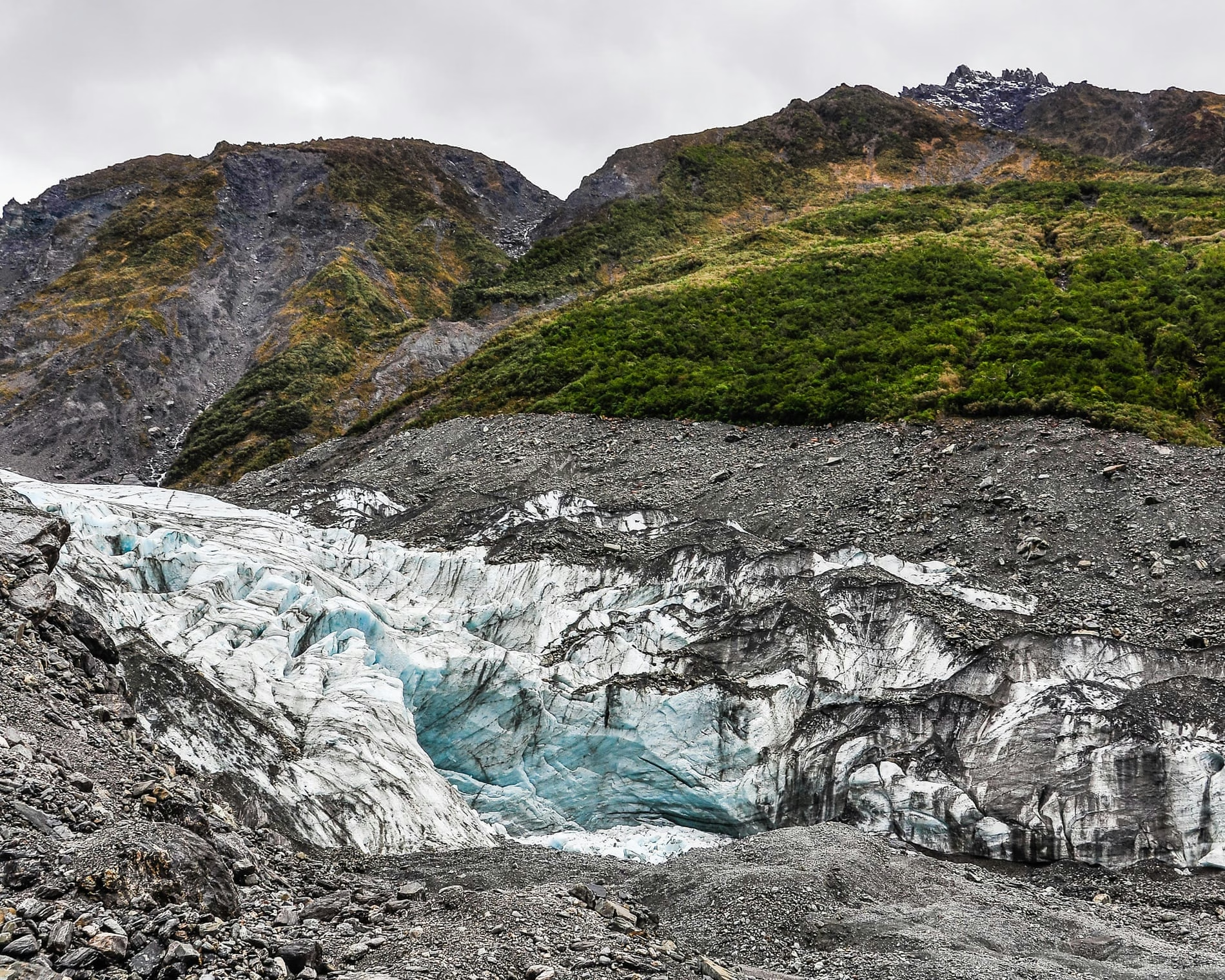
Glaciers are already shrinking under the pressure. The country’s roughly 3000 ice fields dropped from 56 cubic kilometres in 1997 to 30 cubic kilometres in 2023. Projections show glaciers will likely lose between 14 and 86% of their volume by 2100 under low emissions, or between 69 and 100% under high emissions.
Warming waters are disrupting marine life at an alarming pace. New Zealand’s oceans warmed 34% faster than the global average in 2025, triggering mass sea sponge bleaching, southern bull kelp die-offs, large-scale fish standings, and penguin deaths. Carbon dioxide levels rose 30% since monitoring began in 1972, while methane hit its highest concentration ever in 2025.
Extreme weather has already proven devastating. Cyclone Gabrielle and the Auckland floods in 2023 caused widespread destruction, fatalities, and billions of dollars in recovery costs. Continued warming will likely worsen these storms, exacerbate droughts, and push sea levels higher, eroding coastal infrastructure and limiting Māori communities’ access to culturally significant sites.
"Whilst it sounds like a small amount … it is a significant baseline shift that’s having ramifications through nature, through our communities, and through businesses and industry," said Dr Alison Collins, chief science adviser for the Ministry for Cities, Environment, Regions and Transport. She emphasized that shifting weather patterns demand immediate attention beyond environmental circles.
"Climate change is not just an environmental issue. It’s a human story. It’s an economic story."
