Loading...

A gap in health records leaves adoptees in the dark.
80%
Originality
95%
Accuracy
0%
Upvotes
Adopted adults across the UK face significant barriers to accessing vital family health records, a gap that government ministers now admit requires urgent reform. Officials launched a consultation in February 2026 to overhaul how medical information is retained and shared.
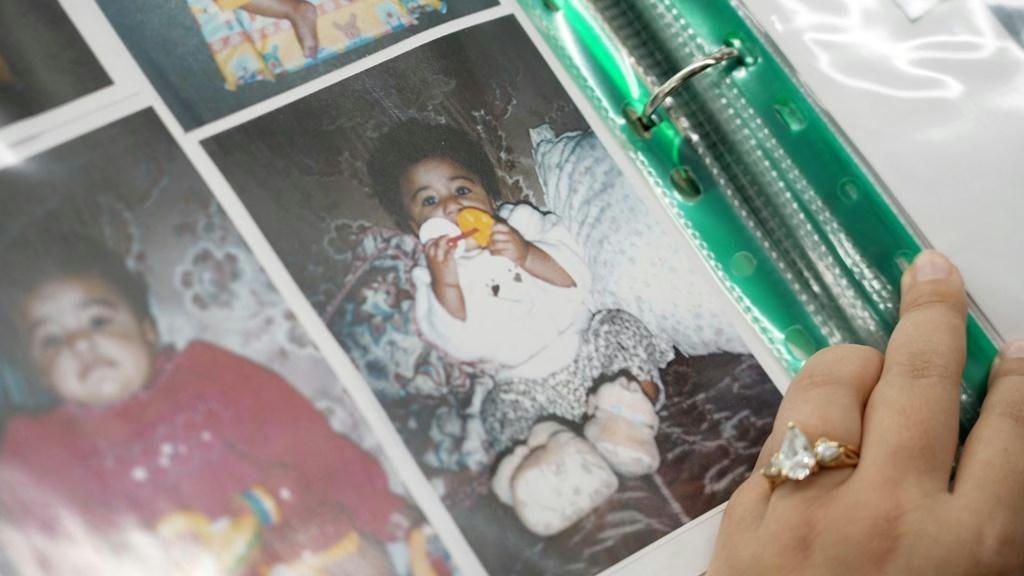
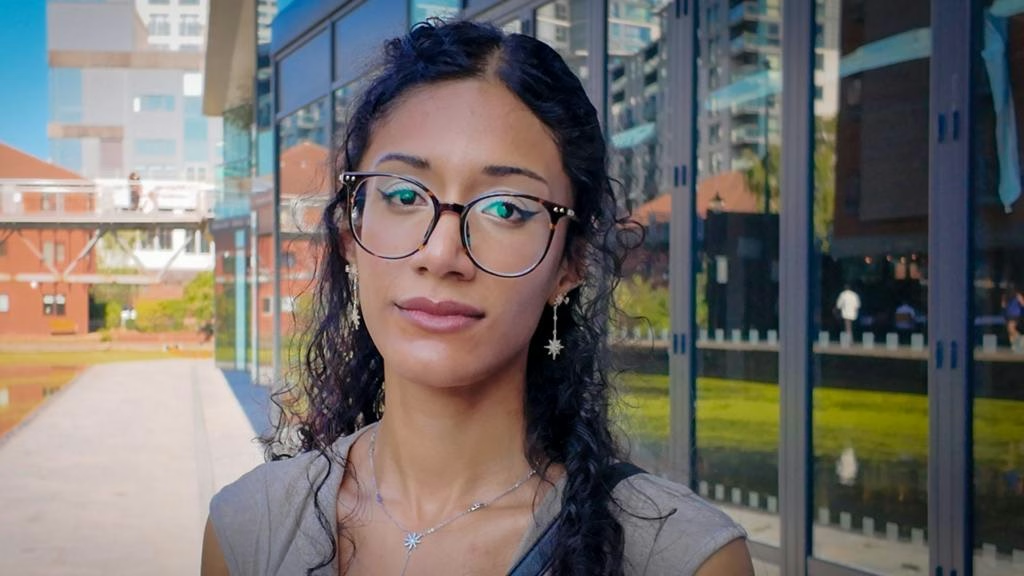
Aaliyah waited years to learn about her biological family’s health after she was removed from her parents at seven months. Bradford Council delivered her records in an unmarked envelope just before her 25th birthday. The documents revealed her mother’s lifelong struggle with eating disorders, a detail that would have helped Aaliyah understand her own severe teen anorexia. "Not knowing anything about yourself genetically is terrifying," says the 26-year-old.
The UK NHS changes adopted children’s health identifiers to protect anonymity, but merged records frequently omit wider family history. Support services for adoptees vary by region, and no UK nation grants a legal right to access these medical files. Bradford Council recently apologized for failing to provide psychological support when Aaliyah received her sensitive documents.
Delayed information also endangered Dr Chris Tennyson, a clinical psychologist from Belfast. A social worker informed him of a genetic condition in his family only after a meeting with his birth father was already arranged. The disorder, malignant hyperthermia, triggers dangerous reactions to certain anaesthetics. Chris learned he carried the gene at 37, 23 years after relatives were first tested. He now argues that care records must update automatically as new family health data emerges.
Courtney-Grace experienced similar gaps after growing up in the UK care system. Doctors initially misdiagnosed her genetic mutation, which increases tumour risk, as asthma and anxiety. Her biological mother suffered from depression, but that detail never reached her doctors. The 28-year-old now ensures her five-month-old daughter, Tine, will be tested for the mutation at age five using cord blood collected at birth.
"Adoption support and how it's set up at the moment isn't working well enough and there are obvious gaps in a number of areas that we're going to be looking at making changes to," MacAlister said. The minister for children and families acknowledged that current rules struggle to balance biological relatives’ privacy with adoptees’ health needs. NHS England advises clinicians to keep enough data for continuity of care while shielding third-party information when necessary.
Health professionals and adoptees agree that the system requires a structural overhaul. Families in care should not have to navigate complex bureaucracy to protect their own health.
