Loading...

India's reliance on China deepens as trade gap widens
85%
Originality
95%
Accuracy
0%
Upvotes
India’s trade deficit with China has ballooned to $112bn this year, more than doubling since 2020, as New Delhi struggles to wean its factories off Beijing’s supplies despite years of tariff hikes and political friction.
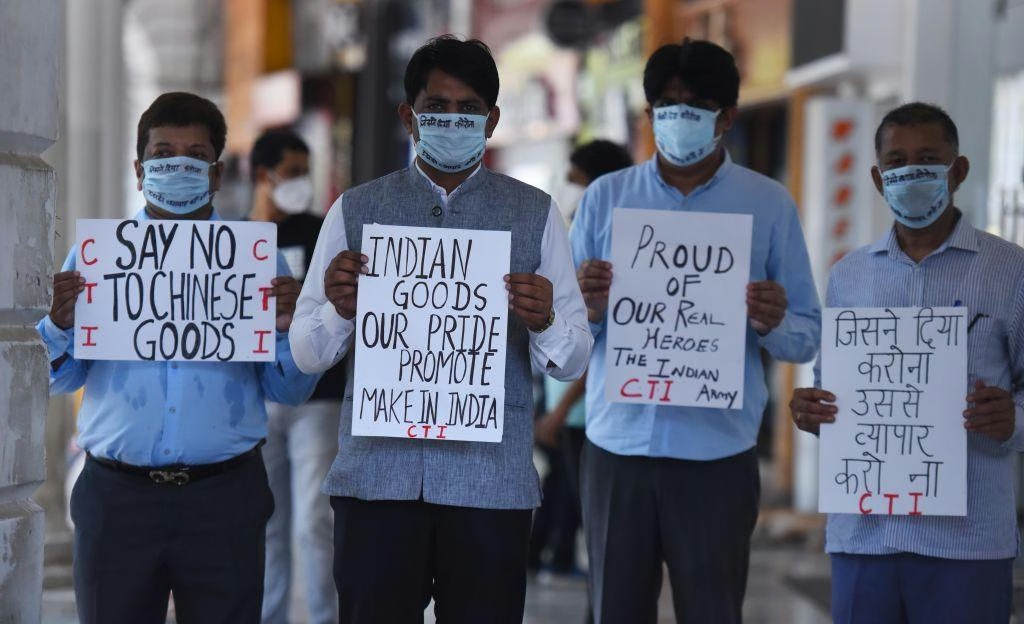
Diplomatic ties collapsed after the 2020 Galwan Valley clashes, prompting Delhi to ban Chinese apps and levy anti-dumping duties. Yet imports have doubled while exports to China stay below pre-pandemic levels. The gap now ranks among the most asymmetric trading relationships globally.
"China now supplies over 30% of India's industrial imports, and India depends on it for more than 100 critical products. And the imbalance is worsening," said Ajay Srivastava of the Global Trade and Research Initiative. If the current import pace holds, the deficit could climb to $134bn, handing Beijing greater leverage over Indian manufacturing.
New Delhi has successfully boosted local assembly in sectors like smartphones, now producing more than a quarter of the world's iPhones. However, factories still rely on imported components for final production. "Yet, production remains largely assembly-based and depends heavily on imported components, particularly from China," Srivastava noted.
The dependency spans industrial machinery, battery inputs, chemicals, and solar cells. Electrical machinery and electronics alone make up 36% of India’s imports, followed by machinery and mechanical appliances at 21.7%, according to the Observer Research Foundation. Experts warn that cutting off these supplies would halt factories rather than just reduce consumer goods.
Global market shifts are accelerating the trend. China faces excess capacity in steel, solar panels, and electric vehicles as its domestic economy slows, pushing manufacturers to sell goods cheaply overseas. Western tariffs on Chinese exports are also redirecting these products toward India, where rapid industrial expansion creates fresh demand.
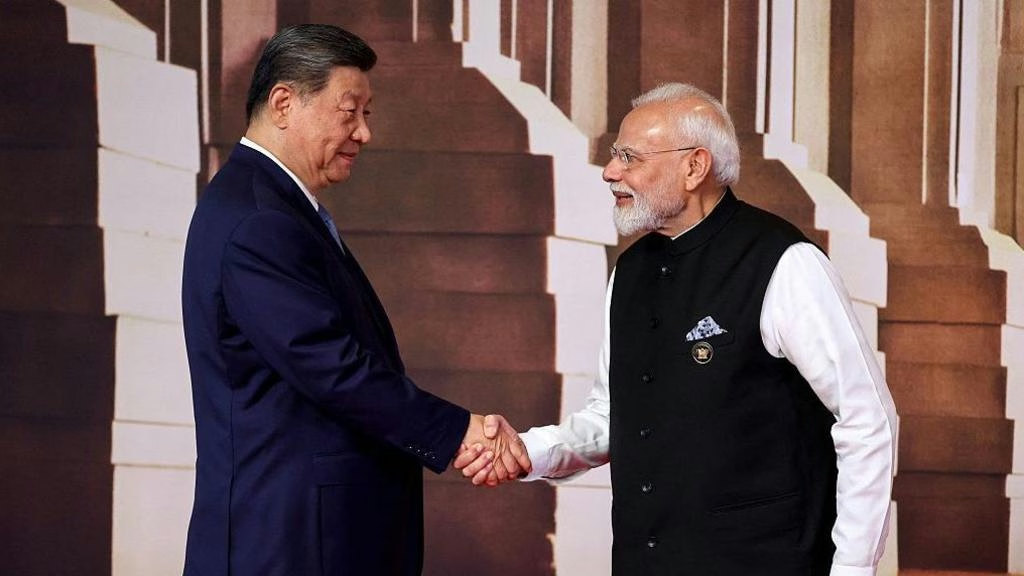
At the 18th BRICS Summit in Delhi on 18 September 2026, Prime Minister Narendra Modi and President Xi Jinping pledged to tackle these structural trade imbalances. Policymakers face a difficult task untangling decades of embedded supply chains while trying to expand domestic manufacturing.
