Loading...

Super Intelligence Force aims to secure US tech leadership
85%
Originality
95%
Accuracy
0%
Upvotes
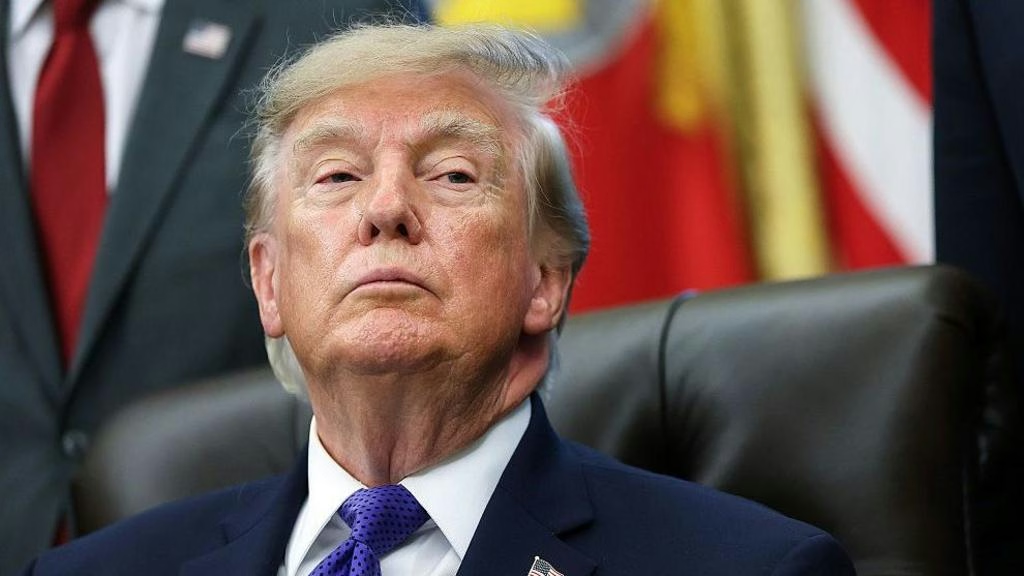
President Trump launched the Super Intelligence Force, a new federal task force to coordinate artificial intelligence policy and maintain American technological leadership.
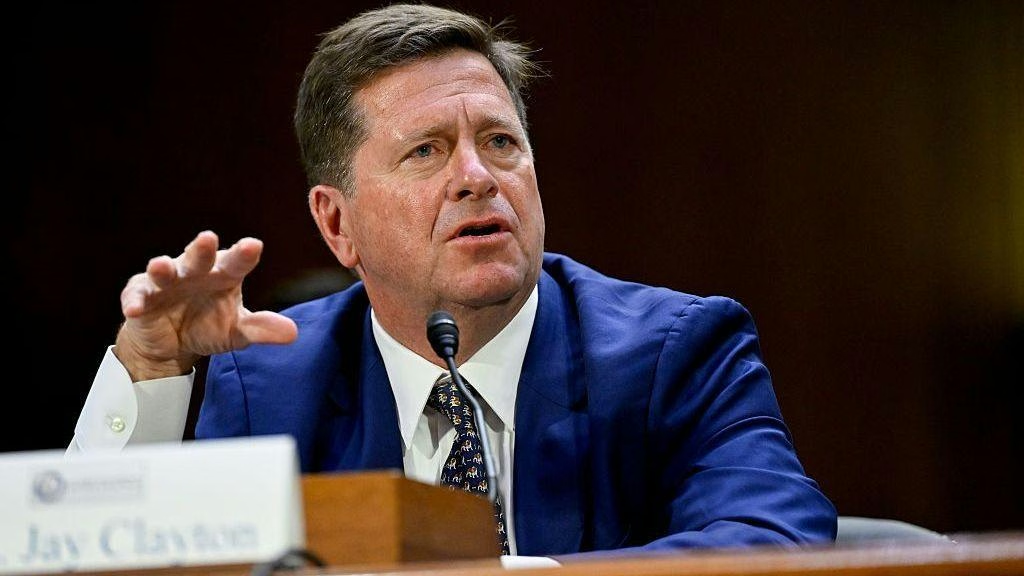
Director of National Intelligence Jay Clayton will lead the new group. The team includes Federal Trade Commission Chair Andrew Ferguson, Undersecretary of Defense for Research and Engineering Emil Michael, and Office of Personnel Management Director Scott Kupor. The structure reports directly to the president and White House Chief of Staff Susie Wiles.
The initiative will manage how the government interacts with consumers, public interest groups, religious organizations, critical infrastructure providers, and major technology firms. Trump outlined these goals in a Sunday post, framing the effort as a way to sustain US dominance in a rapidly evolving sector.
Industry leaders have pushed for stricter oversight of AI development. OpenAI CEO Sam Altman argued that society must embrace certain risks to unlock the technology's full potential. "The world should accept some bad things happening for the benefits of this technology and people having the agency," Altman told Politico's technology-focused newsletter Decoded. Trump has repeatedly rejected calls for heavier government regulation, preferring to let companies manage their own safety standards.
Alongside the task force announcement, Trump signed an executive order officially renaming artificial intelligence to super intelligence. He previously criticized the original term, claiming it made the technology sound fake. Experts have raised concerns that the new title could create confusion, as the phrase traditionally describes hypothetical systems far beyond current capabilities. Several executives have already adopted the change. "SpaceX is a super intelligence company", Musk wrote on social media on Sunday, confirming he will rebrand his firm's platform from SpaceXAI to SpaceXSI.
The moves follow a voluntary safety pact signed on 29 September, where executives from OpenAI, Anthropic, SpaceX, and Google agreed to self-regulation measures. The new federal structure now sits alongside those private commitments as Washington navigates the next phase of AI governance.
