Loading...

F1's engine debate balances sound and speed.
80%
Originality
95%
Accuracy
0%
Upvotes
Formula 1 is advancing a new engine formula for 2030 or 2031 that pairs V8 turbos with 15-25 percent electrical power. The system will function mainly as a push-to-pass tool to encourage overtaking, steering the sport away from earlier proposals to return to purely naturally aspirated engines.
Drivers including Max Verstappen, Fernando Alonso, and Lando Norris have publicly argued for a return to naturally aspirated power. FIA president Mohammed Ben Sulayem also supports V8 or V10 engines, citing their distinct sound and the lighter weight they allow for the cars. The vision appeals to a romantic idea of drivers pushing machines to their absolute limit without worrying about fuel or tyre conservation.
Practical barriers quickly complicate that picture. Naturally aspirated engines consume more fuel, which would force teams to carry heavier loads or return to refuelling. Refuelling is unpopular with the teams, and historical data shows the 1994 to 2009 refuelling era actually recorded the lowest number of on-track passes in the sport's history.
Environmental and location concerns also block a full return to older engine types. Running more fuel clashes with Formula 1's net-zero carbon target for 2030. Louder naturally aspirated engines would create noise complaints at races held near dense population centres, threatening events in Miami and Las Vegas.
Manufacturers remain in the sport for marketing alignment with consumer technology. Most modern road cars rely on turbocharged engines and partial hybridisation. F1 leadership has decided that matching the automotive industry's current direction makes more sense than chasing historical performance styles.
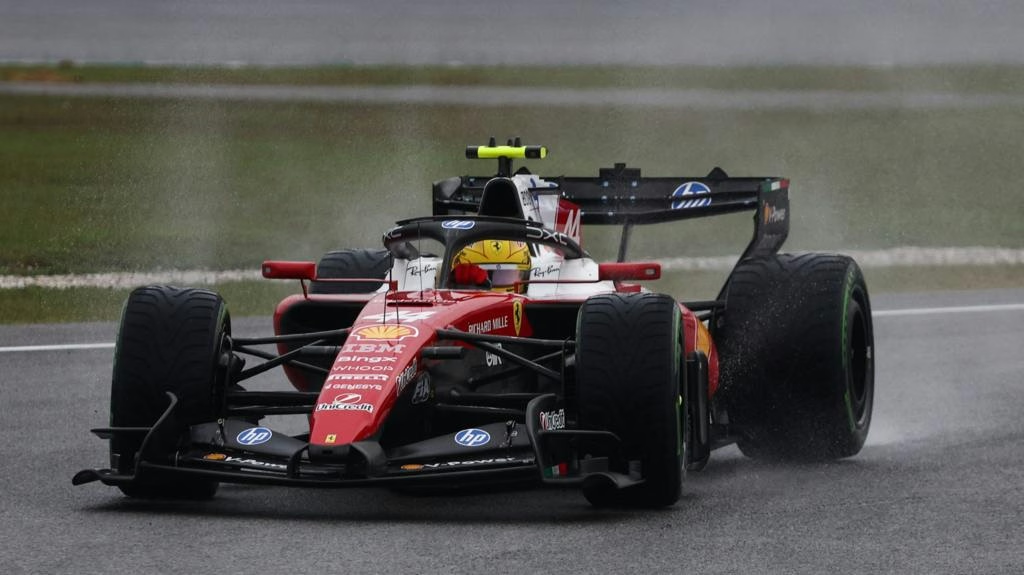
The technical shift follows a chaotic weekend in Malaysia, where the Bahrain Grand Prix drew a record crowd of 261,000 spectators. Max Verstappen secured Red Bull's first win of the season after a software bug in the FIA's wet-weather settings delayed the start by 25 minutes. Kimi Antonelli finished second for Mercedes, while Lewis Hamilton recovered to third after Ferrari's early tyre gamble backfired.
Red Bull's engine program continues to evolve alongside these regulatory changes. Team principal Laurent Mekies confirmed that Ford operates as a core manufacturing and engineering partner for the team's own power unit. "Ford has been with us on this project since pretty much the very beginning," Mekies said. "They are a key strategic partner for us on these operations." The team will now turn its attention to the Singapore Grand Prix, Formula 1's original night race.
