Loading...

Lighting the way in neuroscience.
80%
Originality
95%
Accuracy
0%
Upvotes
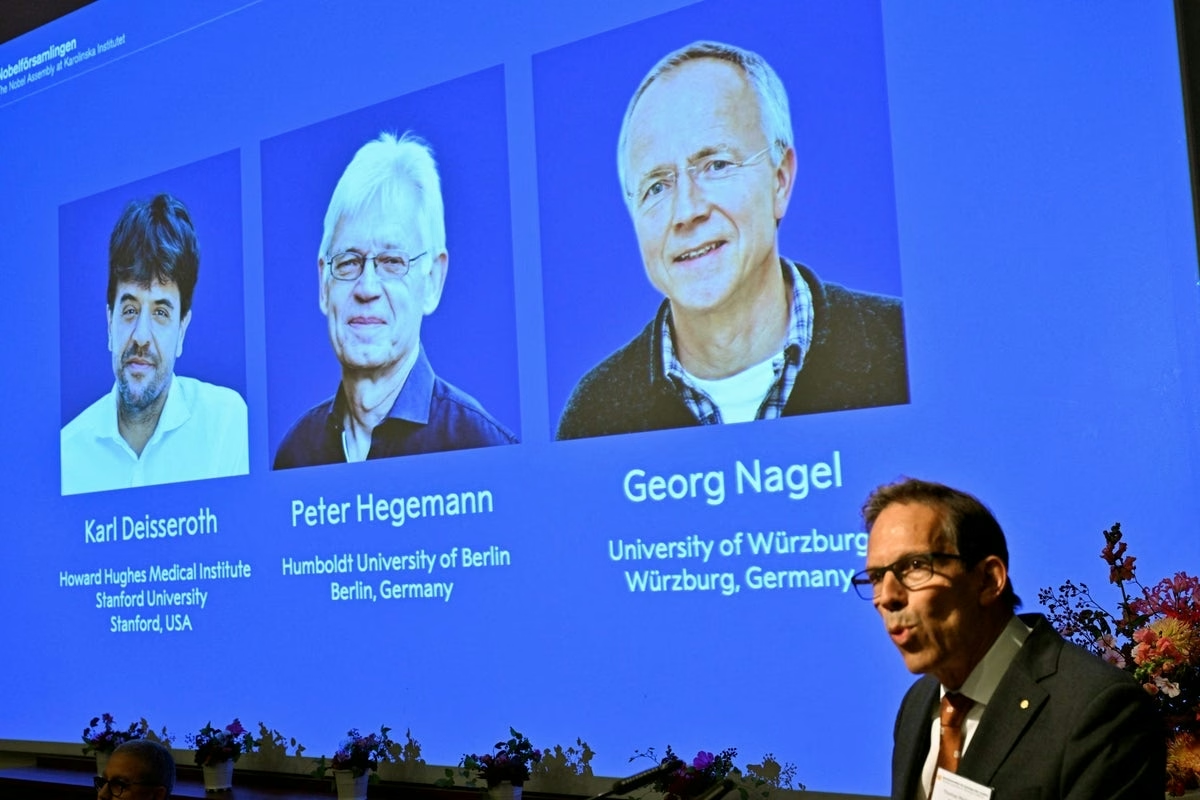
Three researchers have been awarded the 2026 Nobel Prize in Physiology or Medicine for creating optogenetics, a method that uses light to control individual nerve cells and is rapidly transforming neuroscience research.
Karl Deisseroth, Peter Hegemann, and Georg Nagel received the honor for their discoveries concerning light-gated ion channels and optogenetics
. The technique allows scientists to activate or silence specific brain cells at will. Prize officials noted that the method makes it possible to switch on, or off, the activity of individual nerve cells in a living brain
. Labs worldwide now rely on the tool to decode complex neurological functions.
The medicine prize traditionally marks the start of the annual Nobel announcements. Physics, chemistry, literature, peace, and economics awards will follow in the coming days. Experts appointed by the awarding institutions select the laureates through a rigorous review process.
Alfred Nobel established the five original prizes through his will, and they have been awarded since 1901. Ceremonies only paused during World War One and World War Two. The economics prize joined the lineup in 1968 after Sweden's central bank, the Riksbank, funded it. Previous medicine winners include Alexander Fleming for his 1945 penicillin work and Karl Landsteiner for identifying human blood groups in 1930. Last year, Mary Brunkow, Fred Ramsdell, and Shimon Sakaguchi won for their research on how the immune system protects healthy cells.
Celebrations conclude on December 10, the anniversary of Nobel's death. Laureates receive their medals at ceremonies in Stockholm, while the Peace Prize is presented in Oslo. The events draw the Swedish and Norwegian royal families before moving to gala banquets honoring the winners. More than 125 years after Nobel signed his will, these traditions remain intact.
