Loading...

Electric shock gloves spark debate over pain and fear.
85%
Originality
95%
Accuracy
0%
Upvotes
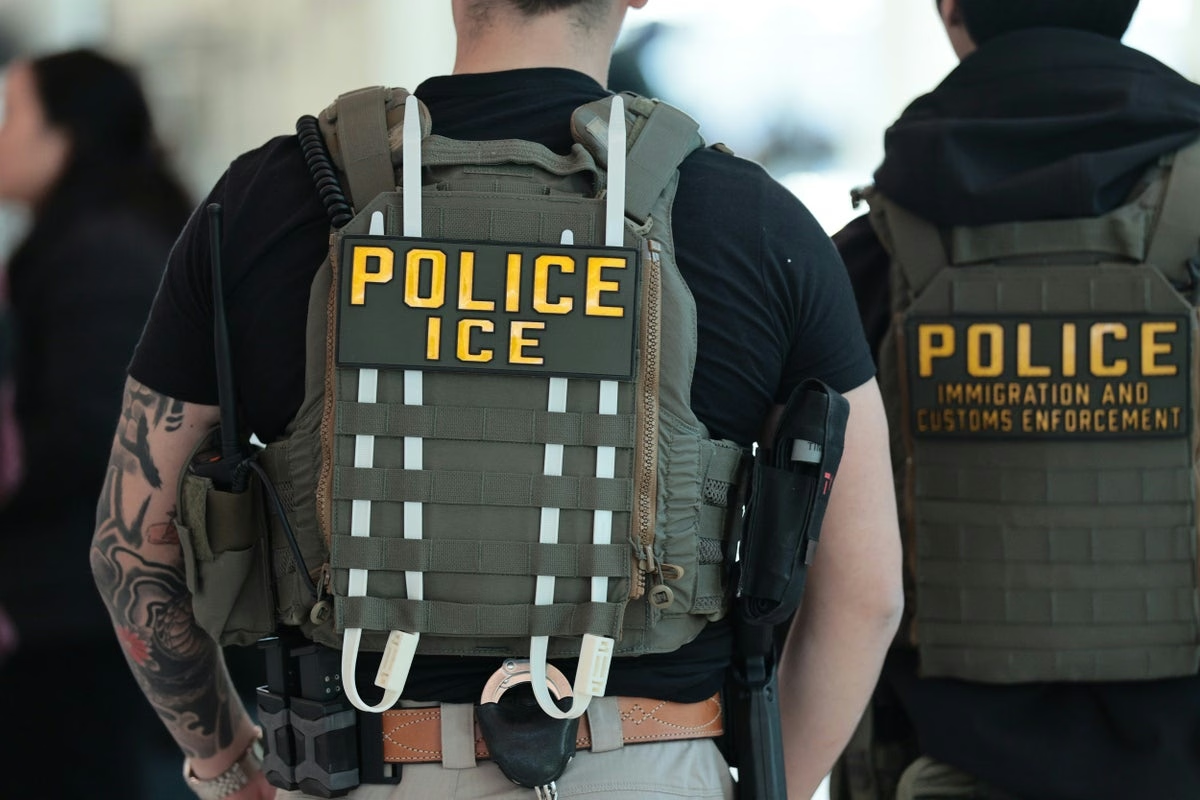
U.S. Immigration and Customs Enforcement is moving forward with a $16.7 million contract to equip 6,000 agents with electric-shock gloves, despite an internal U.S. Army trial warning that the devices cause intense pain and lasting fear.
The agency finalized the purchase in August for the G.L.O.V.E., or Generated Low Output Voltage Emitter, manufactured by Compliant Technologies LLC in Lexington, Kentucky. Homeland Security officials previously outlined plans to spend up to $20 million on the conductive distraction devices by March, categorizing them as low-impact equipment for arrests and civil disturbances.
An October 2024 study conducted by the Naval Surface Warfare Center Indian Head Demonstration and Assessment Team at Fort Leavenworth, Kansas, tested the gloves on role-playing soldiers acting as combative inmates. The 38-page report found that participants stopped resisting within seconds of receiving an electrical charge and stated that merely seeing the device prompted compliance. Investigators also noted the gloves increased efficiency during forced cell extractions and lowered physical strain on guards.
The military trial documented significant side effects, however. Test subjects reported fatigue, soreness, and heightened anxiety about future shocks. Researchers observed that wet or oily skin amplified the electrical feedback, with one participant enduring discomfort for 30 minutes. The study explicitly noted it lacked statistical data on long-term efficacy and did not assess broader health impacts.
ICE leadership reviewed the military findings before signing the contract. Agency officials defend the equipment as a de-escalation alternative to lethal force, stating that officers are highly trained in restraint tactics. White House border czar Tom Homan indicated that full rollout will pause while the agency completes administrative policies and training modules.
Lawmakers and civil rights advocates have pushed back sharply. Sixteen Democratic senators sent an August 27 inquiry demanding safety protocols and deployment guidelines, a request ICE has not addressed. Sen. Catherine Cortez Masto of Nevada highlighted the transparency gap, noting the public lacks clarity on agent training and usage rules.
Critics point to a broader pattern of agency conduct. Records from American Oversight show a nearly 400 percent spike in ICE use-of-force incidents during the first months of the second Trump administration, coinciding with record custody deaths and at least five officer-involved shootings, including two U.S. citizens. "Everyone should be alarmed that ICE is preparing to deploy a tool designed to inflict, at best, intense pain, without showing that it is safe for the people who will be subjected to it," said Chioma Chukwu, executive director of American Oversight.
The American Civil Liberties Union echoed these warnings, arguing the discreet design of the gloves increases the risk of unchecked force. Meanwhile, manufacturer guidelines mandate biannual recertification and ban use against pregnant women, children, the elderly, or individuals showing only verbal defiance. A pending Kentucky lawsuit alleges a 43-year-old man died in county jail after officers applied a Taser and the shock gloves 40 times in succession.
Proponents maintain the technology reduces physical harm during confrontations. John Peters, president of the Institute for the Prevention of In-Custody Deaths, described the sensation as a sharp distraction. "It’s immediate and sharp, and it will distract you," Peters said. "For smaller officers or weaker officers or older officers, I think it has a great advantage."
