Loading...

After 57 years, a life of service and reform.
80%
Originality
95%
Accuracy
0%
Upvotes
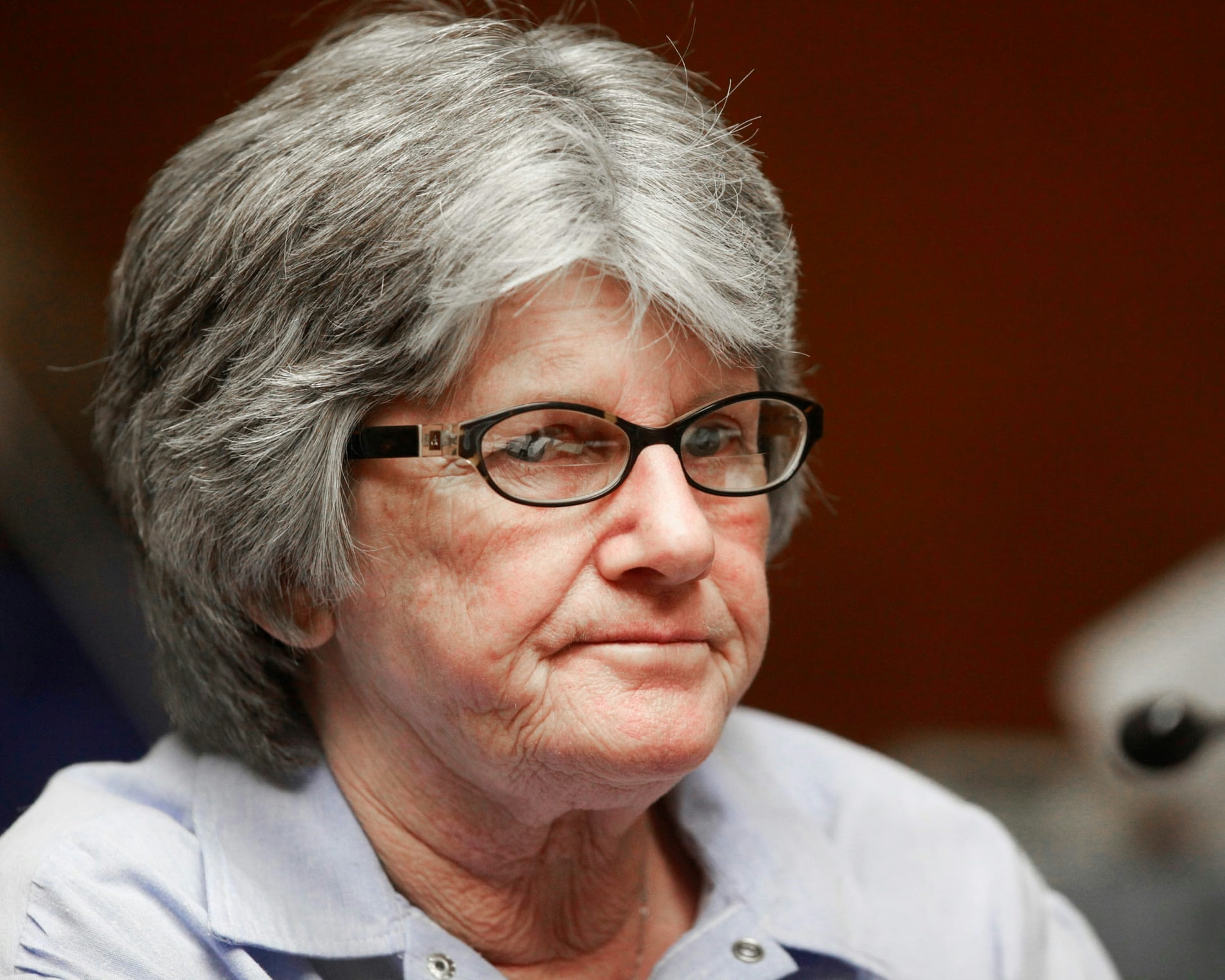
California’s board of parole hearings granted third-time parole to Patricia Krenwinkel on Tuesday, a decision that now requires final approval from Governor Gavin Newsom. Krenwinkel, 78, was granted release after nearly six decades in prison for her role in the 1969 Tate-LaBianca murders in Los Angeles.
She was 21 when she participated in a violent crime spree over two nights that killed actor Sharon Tate, who was eight months pregnant, and four of her friends, as well as grocery store owners Leno and Rosemary LaBianca. Krenwinkel was convicted in 1971 and has served a longer sentence than any other woman in California.
The parole board highlighted 57 years of documented rehabilitation, citing a clean disciplinary record and nine consecutive psychological evaluations over the past 40 years that classified her as a low public safety risk. During her incarceration, she earned a college degree and trained service dogs for people with disabilities.
Her attorneys maintain she has fully accepted responsibility for the killings and is prepared to reenter society. “Reaching this moment has taken decades of hard, deliberate work to confront who she was, what she did, and the devastating harm she caused,” her longtime lawyer Keith Wattley said in a statement after the board’s decision. Wattley, who has represented Krenwinkel for 16 years, urged Newsom to uphold the recommendation.
Debra Tate, Sharon Tate’s sister, has repeatedly opposed Krenwinkel’s release. Newsom previously overturned two earlier parole grants in 2022 and 2025, acknowledging Krenwinkel’s rehabilitation and serious chronic medical conditions but arguing she still lacked sufficient insight into her crimes. State regulations require officials to consider her elderly age and the fact that she committed the offenses as a youth.
Krenwinkel’s legal team argues that repeated denials in high-profile cases indicate political pressure rather than evidence-based risk assessment. Her case has drawn attention to broader concerns about aging inmates in the US prison system. Newsom’s spokespersons did not immediately respond to an inquiry on Wednesday.
