Loading...

Deadliest attack in Saudi Arabia's decade-long conflict
85%
Originality
95%
Accuracy
0%
Upvotes
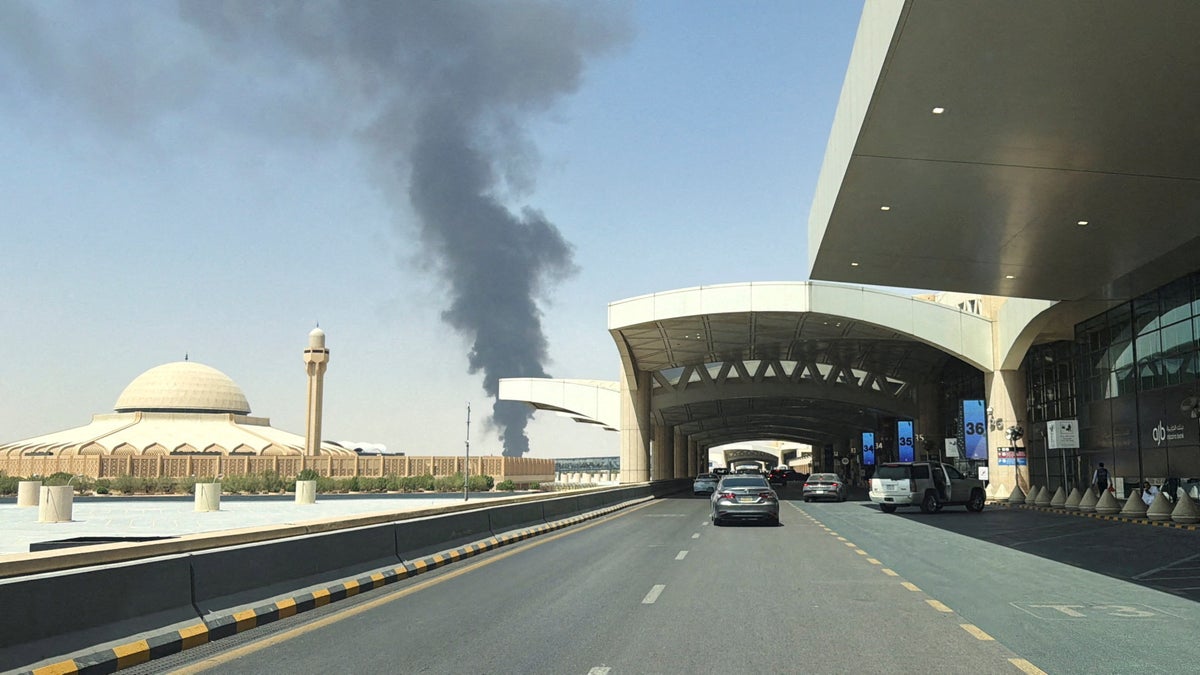
Houthi forces killed at least 12 people and injured 309 at Riyadh's King Khalid International Airport on Saturday, the deadliest strike in Saudi Arabia in almost a decade. This marks the third attack on the capital's hub this week as the Houthi campaign against the kingdom intensifies.
The Saudi civil aviation authority confirmed the nationalities of the dead, listing four Saudis, two Bangladeshis, and one citizen each from the US, Jordan, Palestine, Syria, Sudan, and Egypt. Hospitals in the city were overwhelmed with casualties arriving by ambulance and helicopter, with some patients reported in critical condition.
The attack caught travelers off guard as Saudi Arabia's threat warning system issued no alert. Operations at the airport, which serves a city of about eight million, were suspended and all flights were diverted. Two earlier strikes this week killed four people at the same facility and severely damaged a parked commercial aircraft.
The Houthis declared the strike successful, with the head of the Houthi media office posting on X that the movement had "shut down Riyadh international airport". The group warned commercial airliners to avoid Saudi airspace, designating it a military operations zone following a Saudi-backed Yemeni offensive launched on Monday.
Witnesses described a chaotic scene inside the terminal. One eyewitness reported an explosion followed by casualties on the ground, while an injured passenger described seeing an object flying through the sky before a section of the ceiling collapsed near a departure gate. More than a dozen ambulances rushed to the facility as verified video showed emergency vehicles at the scene.
International reactions emerged quickly. US President Donald Trump said the US might join the Saudi military campaign and would make a decision on a response quickly after reviewing the attack. US Secretary of State Marco Rubio condemned the raids, stating they "demonstrate a blatant disregard for innocent civilian life".
The strike underscores the collapse of a fragile peace in Yemen. Saudi Arabia led a coalition into the war in 2015 to push Houthis from Sanaa and signed a ceasefire with the rebels in 2022 that froze the fighting. The agreement unraveled over the summer as Houthis seized the Bab el Mandeb chokepoint, prompting Saudi-backed forces to launch a new offensive this week. Houthi forces are currently besieging Taiz, and a Saudi-led coalition has promised to retaliate for the airport attacks.
The violence disrupted major economic events, with Riyadh scheduled to host significant energy and investment conferences. Airlines had already suspended or canceled flights to the capital following earlier strikes. Organizers stated prior to Saturday's attack that the events would proceed as planned.